I was included on the editorial board of the international journal The Journal of Academic Librarianship, published by Elsevier.
Author: Juantífico
Full-time professor and researcher at the Universidad Autónoma de Chihuahua (UACH) in Mexico and member of the National Researchers System. PhD in Information and Communication Science (Tallinn University, Estonia), Master in Digital Library Learning (Oslo University College, Norway; Tallinn University; and Parma University, Italy), and Bachelor in Library Science (Universidad Central de Venezuela). He has more than 18 years of work experience in archives, libraries, higher education, and professional development. He has excelled in different roles: cataloguer, database developer, reference librarian, instructor, collection developer, designer of library promotion materials and multimedia resources, coordinator of information literacy programs in higher education institutions, scientific production analyst, consultant, and peer reviewer for scientific journals. His lines of research include: informational literacy, action research, evaluation of scientific production and bibliometrics, open access, information architecture, and digital libraries. He has published over 50 peer-reviewed and indexed articles, five books, 15 book chapters, has presented his papers in over 54 international conferences and has facilitated over 16 workshops for training researchers. Among his editorial experiences, Machin-Mastromatteo is the Associate Editor for the scientific journals Information Development (SAGE) and Digital Library Perspectives (Emerald), as well as an editorial board member for The Journal of Academic Librarianship (Elsevier). He published, from 2015 to 2020, the regular column Developing Latin America in Information Development. He is a peer reviewer for 17 scientific and indexed journals within the fields of information science and education, for which he has evaluated over 200 manuscripts. Follow me at @judamasmas | www.youtube.com/juantifico | www.facebook.com/machinmastromatteo | www.instagram.com/juantifico | http://judamasmas.com | www.patreon.com/juantifico | https://orcid.org/0000-0003-4884-0474
Emerald Publishing initiative
Did you know that Emerald Publishing supports snow leopard preservation efforts? #EmeraldSnowLeopard Wonderful initiative  Emerald Latin America

Concytec’s DEGC Knowledge Café
I participated in #Concytec‘s DEGC Knowledge Café, where we had an interesting conversation about scientific production and evaluation. A very interestin dynamic that they do on Fridays to break the routine, awake creativity and enable the exchange of ideas!
Developing Latin America 5th anniversary
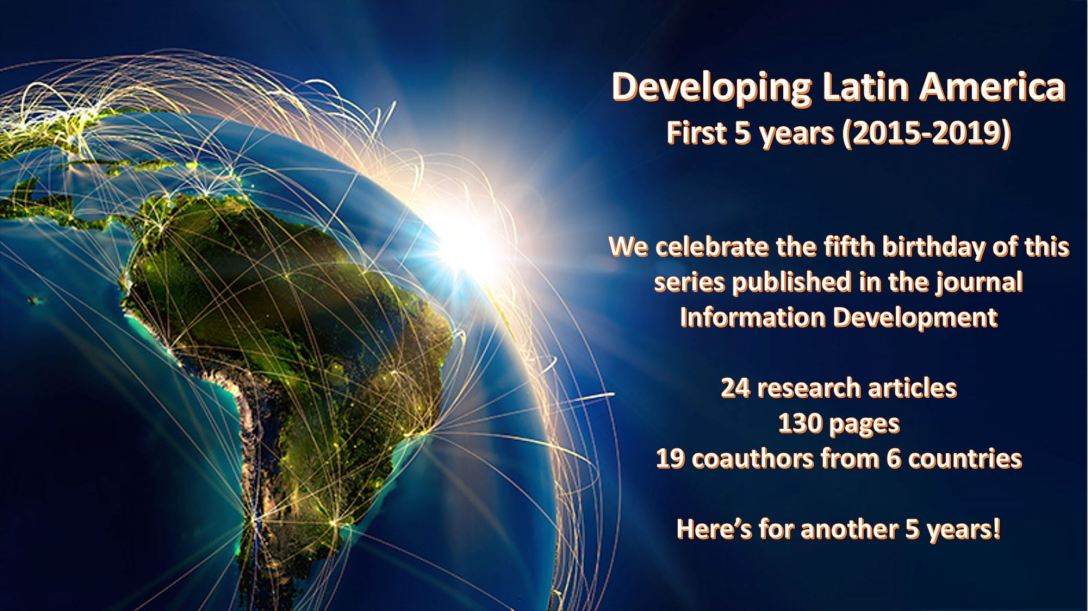
I wanted to share this with you in a special post. In 2015 we had the desire of making Latin America’s issues more present in one of the most important and long-lasting international Library and Information Science journals: Information Development. This regular series, supported by its editor and colleagues in the editorial board just turned five years with its 24th article, published yesterday. I want to thank all readers and my coauthors (alphabetical): Dominique Babini, Mtro Cortés, Rene-Manuel Delgado, Iram Evangelista, Thelma García, Fidel Gonzalez-Quiñones, Renny Granda, Jesus Lau, Basilio A. Martínez-Villa, Eduardo Medina Yllescas, Erbey Mendoza Negrete, Saul M Equihua, Maria Pinto, Marie Romero Waldon, José R. Romo, Gloria Ruiz, Javier Tarango, Myrna Li & Alejandro Uribe Tirado. Special thanks to IDV’s editor Stephen Parker, as well as Paul Sturges and Ian Johnson who supported this idea from the start. Cheers to all of you!


You can check Developing Latin America at http://bit.ly/DLA15-19 and half of the articles are in open access (E-LIS/SSRN), soon I’ll catch up adding them all!
Jon Tennant: open access, disruption of the publishing industry & Latin America

In #HatunTinkuyPerú, we spoke with Jon Tennant, from the Center for Research and Interdisciplinarity (UK) about open access, the disruptive forces affecting the publishing industry and Latin America #Concytec
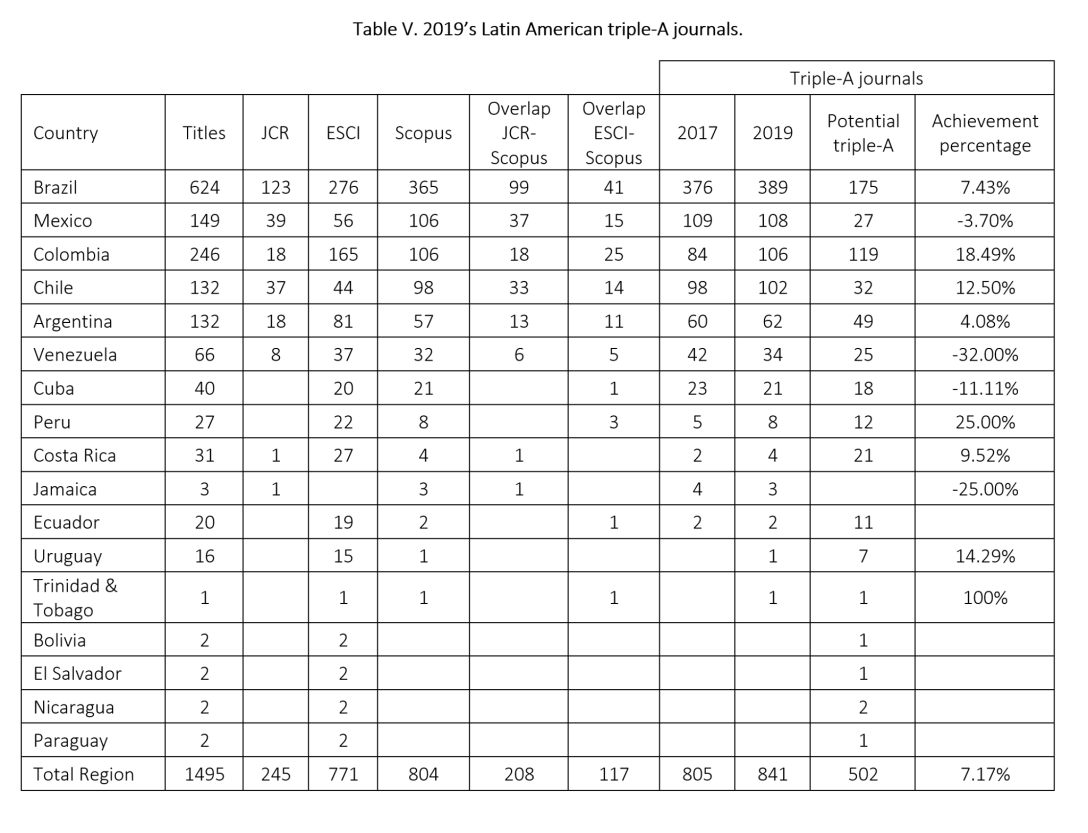
2019’s Latin American Triple-A journals

Bon appétit!
On media censorship, freedom of expression and the risks of journalism in Mexico
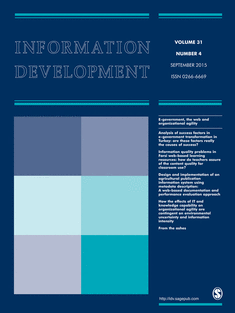
We published ‘On media censorship, freedom of expression and the risks of journalism in Mexico’, first issue of a subseries about this topic, which will treat with it from various countries.
Abstract: We present a classification of the types of censorship of media to frame the various issues that journalism and freedom of expression face in Mexico, which mainly include the role of the State in preventing or enforcing censorship, the monopoly of a few corporate groups that control most of the mass media and dictate fixed editorial lines throughout all of them, the effect of violence on journalism and the issues that are emerging around the freedom of expression in social media.
Full text available at Sage Publications
Recomended reference: González-Quiñones, F., & Machin-Mastromatteo, J. D. (2019). On media censorship, freedom of expression and the risks of journalism in Mexico. Information Development, 35(4), 666–670. https://doi.org/10.1177/0266666919866266
I see what you did there

No filters needed
– What was the name of the app that made you older?
– Thesis.
Participatory Action Research
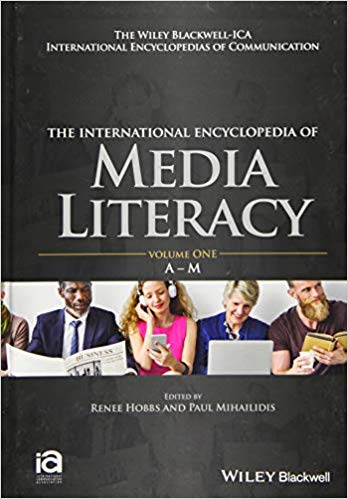
We had the privilege of writing the entry about Participatory Action Research for The International Encyclopedia of Media Literacy, published by Wiley-Blackwell
Abstract: This entry provides an introduction to participatory action research as a research methodology that consists in the implementation of actions by a researcher to study the practices, habits, activities, or behaviors of participants and support them in achieving a state of improvement through their reflection and active engagement. It discusses its characteristics, epistemology and ontology, components, advantages, difficulties, and common criticisms. It also describes the relationship and basic insights that are necessary to apply such a participatory methodology to educational contexts as well as to develop media literacy initiatives.


