I participated in #Concytec‘s DEGC Knowledge Café, where we had an interesting conversation about scientific production and evaluation. A very interestin dynamic that they do on Fridays to break the routine, awake creativity and enable the exchange of ideas!
Category: Professional
Developing Latin America 5th anniversary
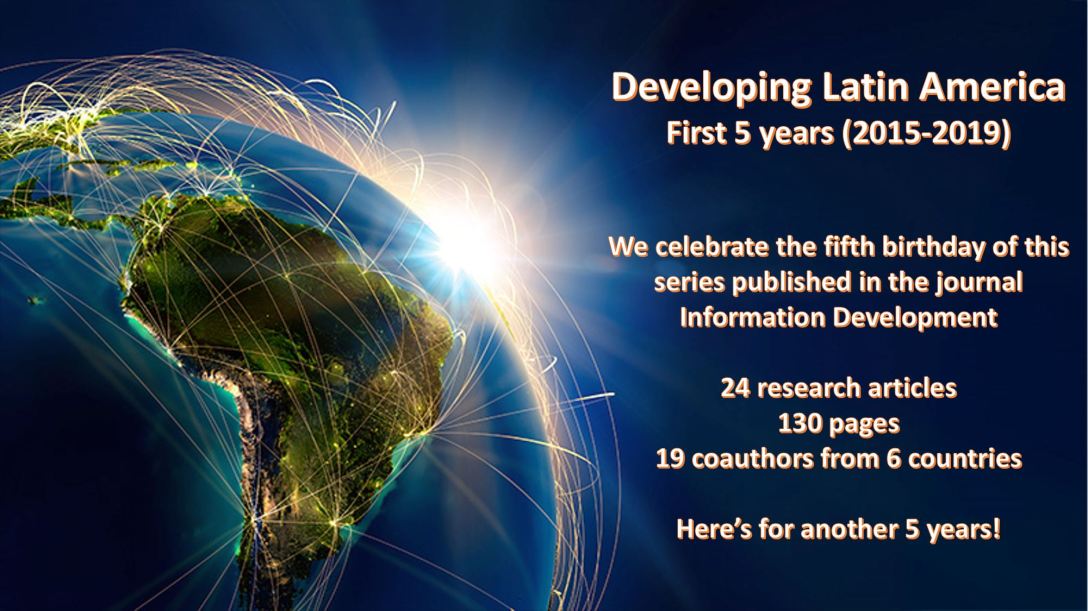
I wanted to share this with you in a special post. In 2015 we had the desire of making Latin America’s issues more present in one of the most important and long-lasting international Library and Information Science journals: Information Development. This regular series, supported by its editor and colleagues in the editorial board just turned five years with its 24th article, published yesterday. I want to thank all readers and my coauthors (alphabetical): Dominique Babini, Mtro Cortés, Rene-Manuel Delgado, Iram Evangelista, Thelma García, Fidel Gonzalez-Quiñones, Renny Granda, Jesus Lau, Basilio A. Martínez-Villa, Eduardo Medina Yllescas, Erbey Mendoza Negrete, Saul M Equihua, Maria Pinto, Marie Romero Waldon, José R. Romo, Gloria Ruiz, Javier Tarango, Myrna Li & Alejandro Uribe Tirado. Special thanks to IDV’s editor Stephen Parker, as well as Paul Sturges and Ian Johnson who supported this idea from the start. Cheers to all of you!


You can check Developing Latin America at http://bit.ly/DLA15-19 and half of the articles are in open access (E-LIS/SSRN), soon I’ll catch up adding them all!
Jon Tennant: open access, disruption of the publishing industry & Latin America

In #HatunTinkuyPerú, we spoke with Jon Tennant, from the Center for Research and Interdisciplinarity (UK) about open access, the disruptive forces affecting the publishing industry and Latin America #Concytec
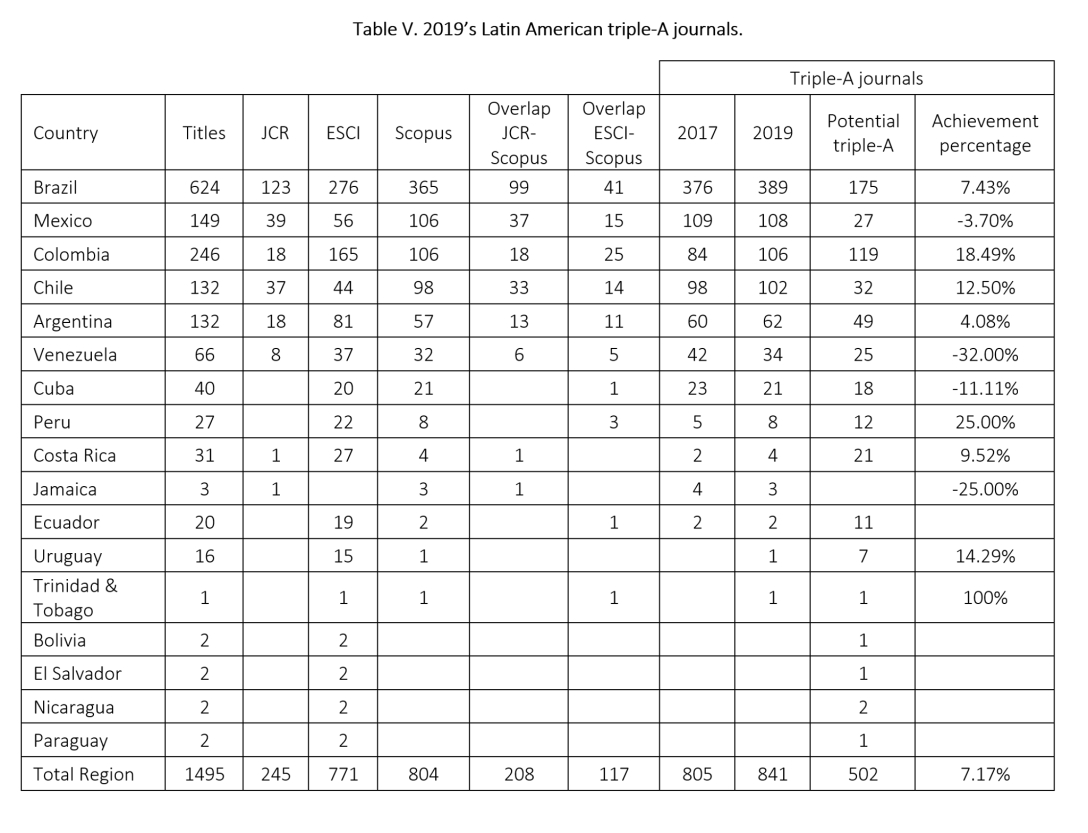
2019’s Latin American Triple-A journals

Bon appétit!
On media censorship, freedom of expression and the risks of journalism in Mexico
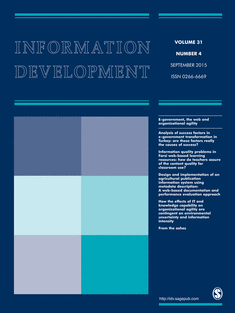
We published ‘On media censorship, freedom of expression and the risks of journalism in Mexico’, first issue of a subseries about this topic, which will treat with it from various countries.
Abstract: We present a classification of the types of censorship of media to frame the various issues that journalism and freedom of expression face in Mexico, which mainly include the role of the State in preventing or enforcing censorship, the monopoly of a few corporate groups that control most of the mass media and dictate fixed editorial lines throughout all of them, the effect of violence on journalism and the issues that are emerging around the freedom of expression in social media.
Full text available at Sage Publications
Recomended reference: González-Quiñones, F., & Machin-Mastromatteo, J. D. (2019). On media censorship, freedom of expression and the risks of journalism in Mexico. Information Development, 35(4), 666–670. https://doi.org/10.1177/0266666919866266
Participatory Action Research
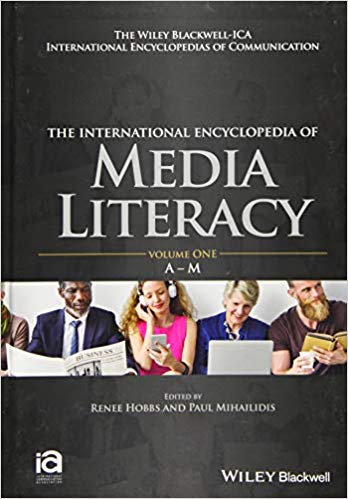
We had the privilege of writing the entry about Participatory Action Research for The International Encyclopedia of Media Literacy, published by Wiley-Blackwell
Abstract: This entry provides an introduction to participatory action research as a research methodology that consists in the implementation of actions by a researcher to study the practices, habits, activities, or behaviors of participants and support them in achieving a state of improvement through their reflection and active engagement. It discusses its characteristics, epistemology and ontology, components, advantages, difficulties, and common criticisms. It also describes the relationship and basic insights that are necessary to apply such a participatory methodology to educational contexts as well as to develop media literacy initiatives.

Information literacy: teaching and development of the competence in elementary education

We published about an information literacy teaching experience in elementary education, part of the research of my PhD student González-López Mariela.
Resumen: Este artículo presenta los resultados de una investigación sobre la enseñanza de Alfabetización Informacional (ALFIN) en la educación básica, cuyo objetivo fue determinar las mejores prácticas para su implementación e identificar los temas a incorporar en una iniciativa de esta naturaleza, así como las formas de afrontar la problemática de la saturación de la información, de modo que se pretende que cada estudiante aprenda a buscar, a encontrar, a seleccionar, a evaluar y a comunicar información, para adquirir conocimientos, habilidades y actitudes. La metodología del estudio se basó en el análisis de experiencias usando un enfoque cualitativo, donde se concluye que ALFIN se implementó exitosamente por medio del uso del juego, aplicaciones digitales para su enseñanza, cursos específicos en sobre el tema, juegos de mesa, la técnica booleana de búsqueda de información, la lectoescritura, enseñanza por medio del dibujo e instrumentos para la evaluación y utilización de recursos educativos. El logro principal fue contribuir con el desarrollo de las competencias que necesita el estudiantado para desempeñarse con éxito en la escuela y para lograr la capacidad del aprendizaje permanente.
Recomended reference: González-López, M., Machin-Mastromatteo, J. D., & Tarango, J. (2019). Alfabetización Informacional: enseñanza y desarrollo de su competencia en la educación básica. E-Ciencias De La Información, 9(2). https://doi.org/10.15517/eci.v9i2.35774
Your PDF Cheat Sheet
These methods are not failsafe, nor they ensure that you’ll get 100% of the papers you need, but legal alternatives are always best!

Proposals to Digital Library Perspectives

We invite you to submit proposals to Digital Library Perspectives, a peer-reviewed and indexed (ESCI & Scopus) journal about digital collections, objects and environments curated, collected and disseminated for advancing scholarship, teaching and learning. Check our aims and guide for authors.

www.emeraldgrouppublishing.com/products/journals/journals.htm?id=dlp
To understand Open Access


