Hello again!
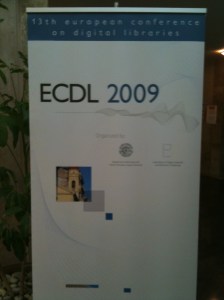
I’m lucky to be right now in Corfu, Greece where I’m attending with my fellow DILL colleagues the 13th European Conference in Digital Libraries. More or less as part of the third semester of the DILL master and thanks to our Professore Vittore Casarosa we have been attending this wonderful, high profile conference in the field of Digital Libraries. As you may or may not have seen, I’m tweeting about the conference, but to complete my own coverage on it I decided to post some things in the blog. So, in this post I will present an outline of what was the first day of conference (09-28-09). Enjoy.

Keynote: Digital Libraries as Phenotypes for Digital Societies
by Gary Marchionini
This 13th edition of the European Conference on Digital Libraries (ECDL) started with “a bang”, with a very interesting keynote by Gary Machionini, titled Digital Libraries as Phenotypes for Digital Societies. Marchionini started with the statement that Digital Libraries gives us a lens on what we are becoming in the digital age, he then defined some characteristics of the digital societies, such as the following ones:
They are determined by topic or interest of individuals or communities, rather than by the geography, because ICTs bridges people regardless of their location. Of course, digital societies are dependant on technologies and electronic infrastructure. They are driven by weak ties, this can be seen in social networks such as facebook where one “collects” contacts or friends that you don’t actually have to know personally, the acquaintance process is very different than in the “real world society”. Individuals in this digital society are also extremely diverse, if the location makes little difference, people interacting in a network come from different places and that makes them different, different culture, religion, behavior, etc. Digital societies grow fast, we can say they are viral, but at the same time they can lose members at the same speed, they are not so sustainable, as the fidelity of the members it’s different from person to person. These societies of course are based on our “real world society” and interact with traditional institutions.
Next, Professor Marchionini defined the Phenotype of Libraries:
- They are social organisms.
- Have foundational and policies that reflects their institutional genetics.
- The influence of the environment affects their collections and services.
- They reflect the social organizations that support them.
Digital Libraries are active workspaces, it’s not enough to set up collections multimedia streams, systems exhibit behavior, this means there’s a memory on them, they are dynamic and interactive, these interactions are kept as a general history (like a website history on an Internet browser), and users interactions should be considered part of a Digital Library collection, these interactions are made by their annotations, comments, news feeds, tags, crowd sourcing, and as a collection, these contributions must be managed.
Key challenges
- Content and context: selection management.
- Preservation: What’s worth preserving? What context to include? Who decides? Who pays? How much? Storage models: replication (copy) migration (change of format, impractical), emulation. Storage policies (authority, cost) Storage challenges: space vs price vs reliability.
- The new Alexandria: distributed content and stakeholder, self organizing content, human-machine hybrid, new kinds of trust management.
- Managing participation and services: a symbiotic human-machine relation
- Content Genetics: born digital documents, hybrids from traditional libraries.
DL Collection models Born digital variants:
- Curated by expertise (Perseus)
- Curated by expertise opportunity (Open Video)
- User contributed without curation (ibiblio)
- User contributed with community curation (wikipedia, youtube)
- Computed (citeseer, technorati, google?)
 judamasmas’ comment: this was a really amazing presentation, I liked it a lot. I also think is important to take into account that the users of the library could create valuable content and that this same content can be part of our actual collections. I think we have some lessons to learn and some features to import from the worlds of open access and social networks, because our way of building collections may not be very attractive by itself and funding is getting more an more difficult, just to cite two reasons.
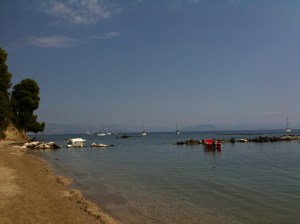
After Professor Marchionini finished his keynote presentation, we went for a coffee break in this really nice and beautiful Hotel Corfu Palace. After the break it was decision time, because they were two sessions in parallel: one on interaction and the other one in knowledge organization, I decided to go to the interaction session. You can find information on the other one in the tweets of my colleague Andrea in twitter (aubreymcfato) or in his blog questoblognonesiste.
Session 2A: Interaction
Hear it: Enhancing Rapid Document Browsing with Sound Cues
by Parisa Eslambochilar, George Buchanan and Fernando Loizides
It is interesting that the presented started stressing the point that in Digital Libraries interfaces are silent, like in “real world libraries”, but has it to be like this?
Document readers have attempted to help users locate new or unknown information and there has been success with providing visual target cues.
Some of their findings:
Audio seems to permit faster movement and higher zoom levels, it could be improved by better timing the cues, allowing for delays.
Future works:
Evaluate anticipatory cue timing, reconsider performance with improved cue, compare against tactic cues.
judamasmas’ comment: We can think that this could be a good multidisciplinary work because it could involve librarians (digitals or no!), experts in sound media (recording, storing and playing), and even psychologists.
Creating Visualizations for Digital Document Indexing
by Jeniffer Pearson, George Buchanan and Harold Thimbleby
Goals:
Combine elements of digital and print indexing search, understand the properties of search in digital documents
They created a new interface, the digital index viewer: builds traditional index from digital document, with number of occurrences on which pages for different words.
Different presentations of the digital index viewer:
- Color Tag Clouds: red indicate many occurrences (as it represent hot temperature) and blue indicate few occurrences of the term (as it represent cold temperature)
- Tag clouds: the bigger the more occurrences
- Graph: the bigger the more occurrences
User performance on speed of search: traditional index < color tag cloud < graph
judamasmas’ comment: They took the indexes, a very traditional idea that’s present from a long time ago in printed books, and applied them to digital documents, it is interesting that it is an application that generates an index on a digital document and takes some elements we see in web 2.0 like the tag clouds to add more depth to it and to make it more visual.
Document Word Clouds: Visualising Web Documents as Tag Clouds to Aid Users in Relevance Decisions
by Thomas Gottron
Term importance not visible for users, users scan documents on the web, if they are attractive, the user decides to read it or not. Transfer tag cloud idea to important words in documents.
Term importance is calculated by a formula which deals with term frequency, document frequency and corpus size.
Prototype system turn web documents in clouds to help relevance decisions and it’s independent of the query.
judamasmas’ comment: So, one problem with the information overload we have (it’s only getting worse and worse!) is that we struggle with the problem of what item to read first, or what to download. For example google ranks results in its own special way, I’m not saying it’s bad or wrong, it could be good for one occasion, but totally wrong for other ones. This work proposes a system that harvests important terms present in a digital document to help the reader view what is it about in a tag cloud fashion. Also an interesting use of Web 2.0 widgets for visual aid.
 Special Session on Services
Annotation Search: The FAST Way
by Nicola Ferro
Mix content of annotation with metadata, to add richness to improve search, including author of the annotation, language, types (image, text)
judamasmas’ comment: annotation has been a very antique technique that some readers and scholars have used to go back to the books or documents they have studied for a quick look at the parts they like and where they made some notes (funny thing is that my librarian side tells me not to annotate any book for preservation reasons), it is, indeed really good if we can have good annotation tools in digital documents, first because it doesn’t change the aspect actual document and also because we can have a workflow cycle of contributors or fellow researching studying the same documents that we are, creating a series of comments that we can retrieve by type, author, date and so on.
wikiSearch: From Access to Use
by Elaine Toms, Lori McCay-Peet and Tayze Mackenzie
Design an interface for search, to maximize visibility, minimize search time, not overload user’s working memory, provide structured dispaying, provide only relevant information, putting user’s preferred items on interface
Characteristics: Ease, speed, efficiency, navigation, task focus and organization.
Google-like interface was preferred because the new wikisearch was so new, google seemed more simple.
Limitations:
Was lab rat research, very restricted tabs and access to web in general, built tool eliminated labyrinths of pages selected, better integrate with browser and work task.
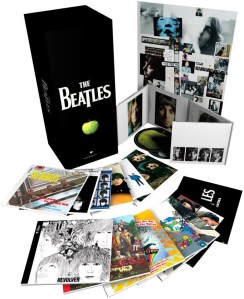
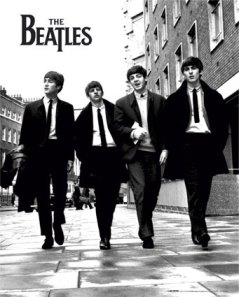 This music is great I have really fond memories of listening to The Beatles throughout my life, great moments enjoying with my friends especially the tracks A Day in the Life form Sgt Pepper Lonely Hearts Club Band and Strawberry Fields Forever form Magical Mystery Tour. It’s funny that I even thought of a classifying system for people who listen to the Beatles, in a broad sense you have the people who likes the first part of their career from (Please Please Me to Help) and the people who likes the second part (from Help to Let it Be), they have two very differentiated stages, you know, when they started “experimenting” when I really think the music turned a lot more interesting, when I started listening to them I really liked the first stage of their career, but from some years ago I prefer the second stage by far. So my theory was like: the first stage is more likely to be liked by children and people in their 60s or more and the other part to people below 60s, of course, this is no proven truth, it’s just silly speculation. I also have my friends who don’t like The Beatles at all and prefer The Rolling Stones over them…
 About this 2009 remasters themselves, I haven’t listened to everything there is yet as I wait to buy it all later this year as a boxset, but I can tell you that so far I heard, the music sounds louder, and maybe sounds a bit brighter. Maybe, the expectation and anticipation was too high that I was expecting something more impressive, but don’t get me wrong, I love the music and must probably will buy the full boxset of the remasters, I also have to compare the two editions with more equipment, I have heard just a couple of albums with my laptop with its own speakers (Altec Lansing) and the iphone default headphones using Winamp. I would like to share with you an experiment I made putting 3 tracks from both remasters in Soundforge (click to enlarge), we can see that the soundwaves are indeed different, but its only a question of volume that’s changed? Or there’s more to it. Please comment your experience with the 2009 remasters.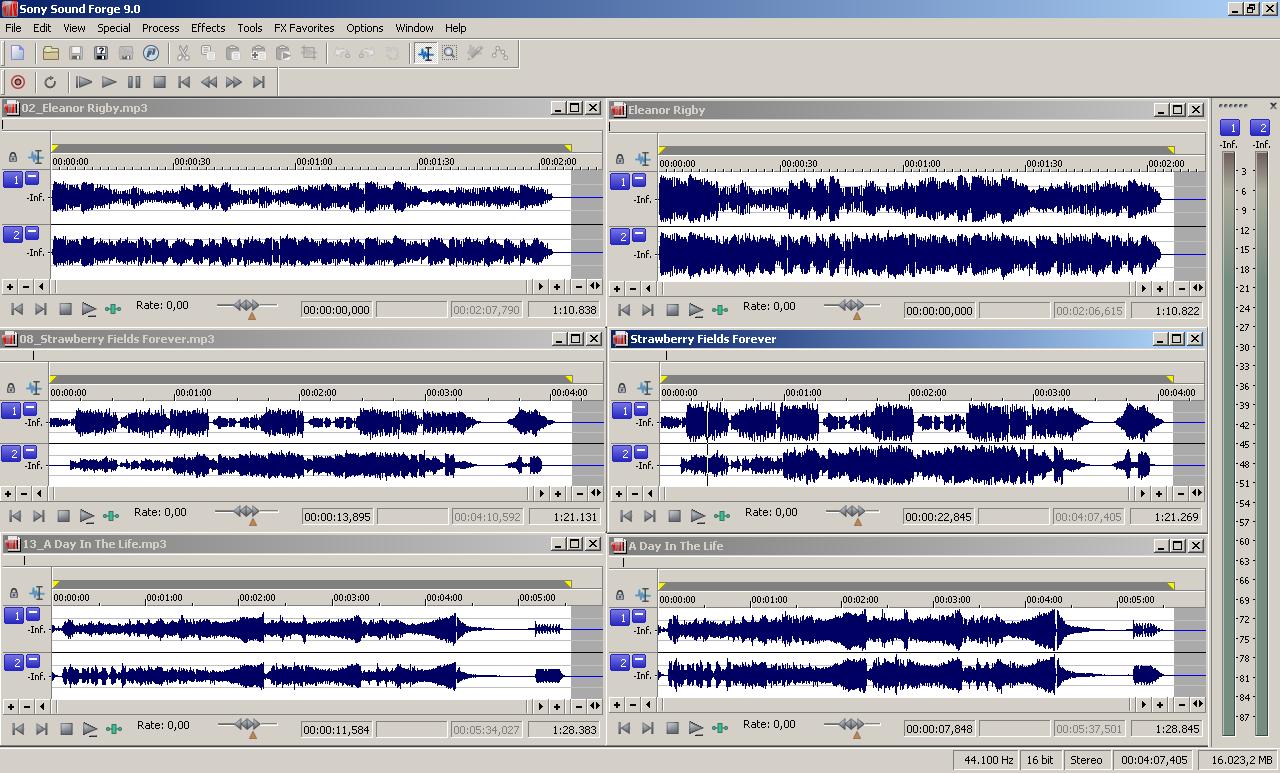


 The BitTorrent Protocol
 Some aspects of its history, development, images and public relations (specially with copyright holders and defendants) are now legendary and even mythical between Internet users and tech geeks, such as the attempt to buy the micronation
 The prosecutor was unable to prove the .torrent files brought as evidence were actually using The Pirate Bay’s tracker.
 After the trial, Sveriges Radio P3 News organised an investigation that found on April 23 that the judge Tomas Norström had several engagements with organisations interested in intellectual property issues. Peter Danowsky, Monique Wadsted and Henrik Pontén from the prosecution side are also members of one of the organisations, the Swedish Copyright Association. Several legal experts have commented that the judge should not have taken the case because of the potential conflict of interest, and that there are grounds for a retrial. As of April 23, Peter Sunde’s lawyer Peter Althin has already put in a request for a retrial. Such requests would normally be handled by the Swedish Parliamentary Ombudsman, but as the case is under appeal for other reasons, it will be taken up in the Svea Court of Appeal.

 Juantífico